Rock painting ideas you can paint this weekend
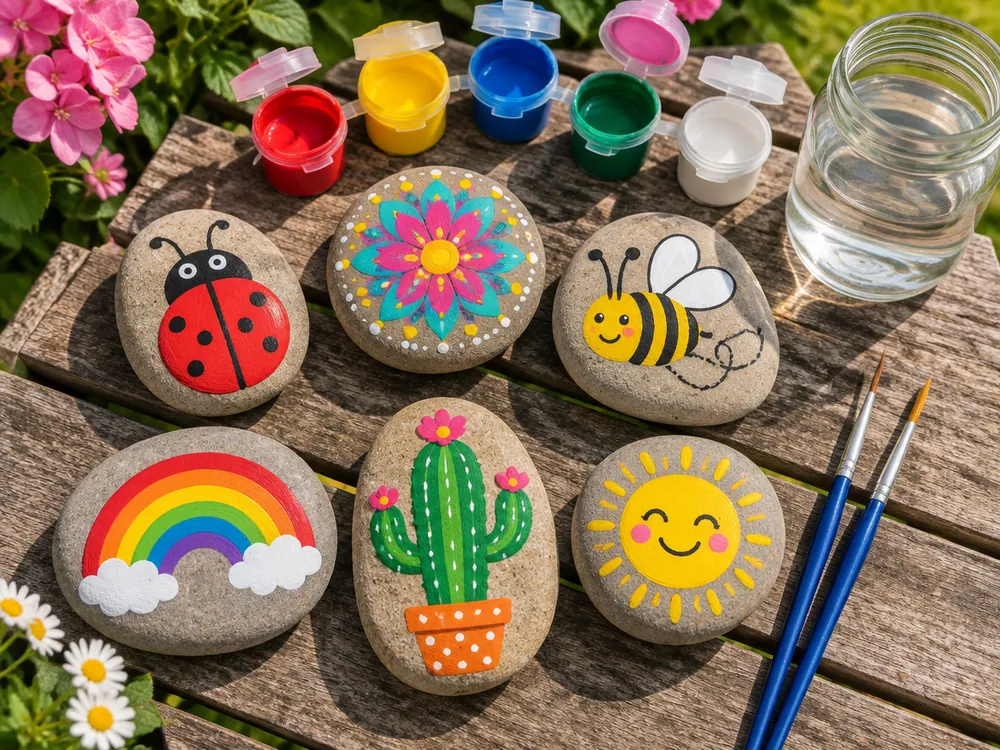
Easy rock painting ideas include ladybirds, bumblebees, cacti, owls, little houses, planets, dot mandalas, kind words, story stones and a noughts and crosses set. Use smooth stones that are washed and fully dry, paint a light base coat of acrylic first, add details with a fine brush or dotting tool, and seal any rock that will live outdoors.
What are some easy rock painting ideas?
Let the stone choose the design. A round stone wants to be a ladybird or an owl, a tall one a house, a flat one a word or a pattern. These 20 work for a first go and look good on a shelf or in a pot plant.
- Ladybird: red base, black head, spots dabbed on with the end of a brush handle.
- Bumblebee: yellow base, black stripes, two white wings.
- Watermelon slice: pink with a green edge and black teardrop seeds. Ideal on a wedge-shaped stone.
- Cactus in a pot: a green rounded shape over a terracotta band, with tiny white spines.
- Owl: two big eyes near the top and rows of small V shapes for feathers.
- Fox or cat face: two triangle ears at the top of a rounded stone, then the face below.
- Hedgehog: a brown body with short dark strokes for spines and a pointed nose.
- Little houses: tall stones painted as a row of houses with doors and windows.
- Fish or turtle: smooth oval stones with scales or a shell pattern.
- Planets and the moon: a dark blue base with stars flicked on from an old toothbrush.
- Dot mandala: rings of dots worked out from the centre (method below).
- Dot flowers: a centre dot with five petal dots round it, scattered over the stone.
- Rainbow stripes: bands of colour across the stone, or one colour going from dark to light.
- Kind words: one or two words such as hello, be brave or you've got this.
- Name stones: a name on each stone for place settings at a family meal.
- Story stones: a set of characters and objects (a fox, a house, a tree, a moon) for children to tell stories with.
- Noughts and crosses: five stones with an X and five with an O, kept in a small bag.
- Christmas: a robin, a pudding, a snowman or a bauble.
- Pet portrait: your dog or cat's colours and markings on a stone of a similar shape.
- Herb markers: plant names on flat stones for pots, sealed so they last.
What paint do you use for rock painting?
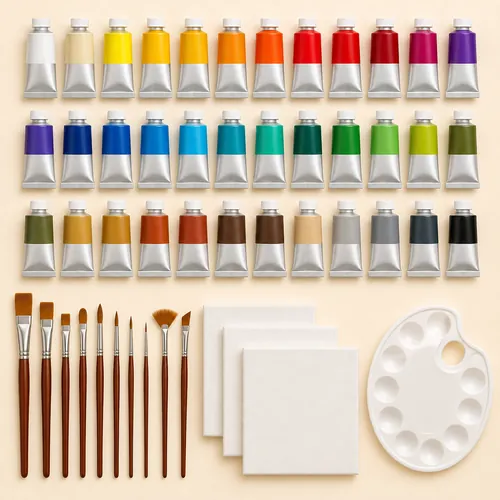
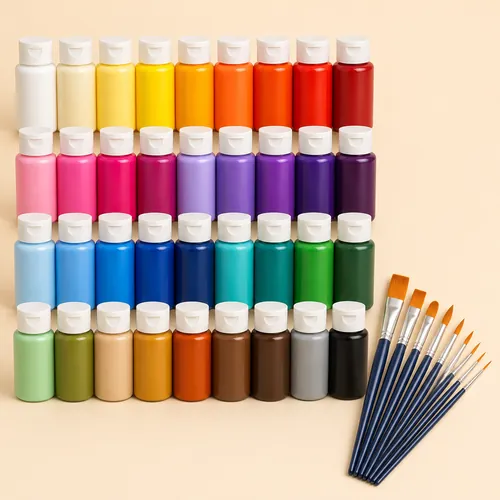
Acrylic paint is the usual choice. It covers well, dries quickly and stays put on stone once it is dry. Both acrylic sets in the paint aisle name rock among their surfaces: the ARTKUNST set has 36 colours in 12ml tubes with a satin finish, plus 10 brushes, 3 canvases and a palette, and the Artecho set has 36 colours in 59ml flip-top bottles with a gloss finish and 10 brushes.
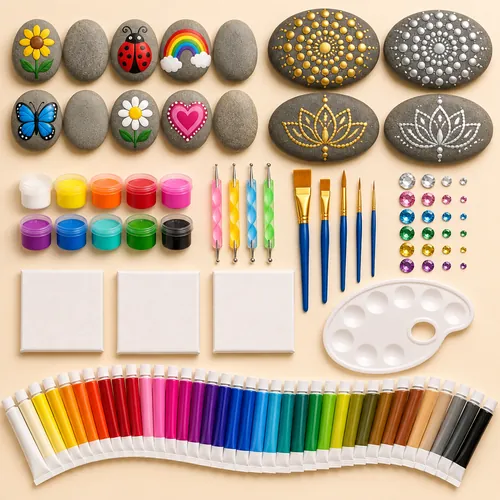
If you would rather start with everything in one box, there are two kits. The JOYIN kit has 10 natural stones, 12 standard paints, 6 metallic paints, 4 glitter gels, 32 gems, 50 stickers, 4 brushes and 2 sponges, and is listed for ages 6 and up. The Hinkler metallic kit is listed for adults and has 4 large rocks, 4 metallic paints, a brush, dotting tools of varying thickness and a 24-page book with eight designs. The rock painting bundle puts both kits and the ARTKUNST paints in one order for less than buying them separately.
Kits with the stones included
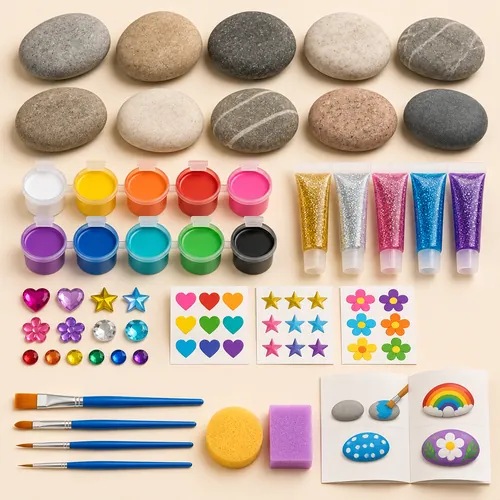
Rock painting kit, 10 stones
£18.99
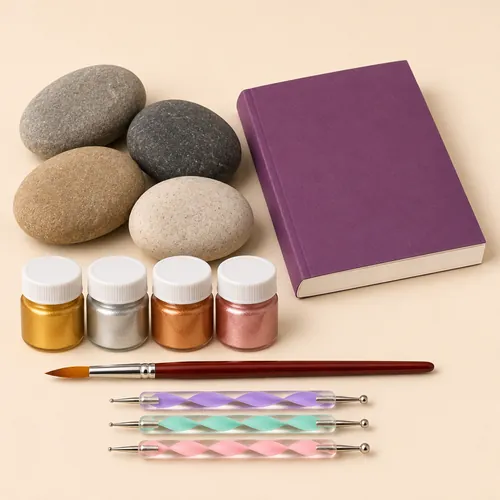
Metallic rock painting kit, 4 rocks
£13.99
Rock painting bundle
£46.99 £49.97 separately
Where do you find rocks for painting?
Look for smooth, fairly flat stones with no deep pits, in a pale colour if you can. Your own garden is a good place to start, and garden centres sell bags of pebbles. Leave beach stones where they are: taking pebbles from beaches is against the law in many parts of the UK. Kits come with their stones, so you can skip the hunt altogether.
How to paint a rock, step by step
- Wash and dry the stoneScrub it with warm soapy water and an old brush, then leave it to dry completely, ideally overnight. Paint will not stick well to dust or damp.
- Paint a base coatGive the stone two thin coats of white or a light colour, letting the first dry before the second. Colours on top look much brighter, especially on a dark stone.
- Sketch the designDraw it lightly in pencil once the base coat is dry. Keep it simple: big shapes read well on a small, curved surface.
- Fill the big areasPaint the largest shapes first with a flat or medium brush, in thin coats. Let each colour dry before you paint next to it.
- Add the detailsUse a fine brush, a dotting tool, the end of a brush handle or a cocktail stick for eyes, spots and small dots.
- Outline lastThin black or white lines round the shapes make a design look crisp. Do these when everything underneath is dry.
- Seal itOnce the paint is fully dry, brush or spray on an acrylic varnish, following its label and working somewhere well aired. Two thin coats protect better than one thick one. Seal the underside too for rocks that go outside.
How to paint a dot mandala rock
Dot mandalas look complicated and are one of the easiest designs to get right, because each dot is a single touch of the tool.
- Start darkPaint the stone black or navy and let it dry. Bright dots stand out on a dark base.
- Make the centrePut one large dot in the middle with your widest dotting tool or the end of a brush handle.
- Space the first ringPlace four dots round the centre at 12, 3, 6 and 9 o'clock, then fill the gaps between them. This keeps the ring even.
- Build outwardsEach new ring sits in the gaps of the ring before, in a new colour and a slightly smaller or larger dot.
- Add dot trailsLoad the tool once and dot four or five times in a line. The dots shrink as the paint runs out, making a neat tapering trail.
- Dry it flatRaised dots stay wet longest, so leave the stone flat and untouched until they have set.
More colours for your stones
What are the common rock painting mistakes?
- Streaky colour: one thick coat dries patchy. Use two or three thin coats over a white base.
- Paint peeling off: the stone was dusty, greasy or still damp. Wash it, dry it properly and start again.
- Muddy colours: painting next to or over wet paint. Wait until each colour is dry to the touch.
- Sticky varnish: the paint underneath was not dry, or the varnish went on too thick. Leave it longer and use thin coats.
- Fading outdoors: unsealed paint wears in the rain. Seal garden rocks on every side.
- Gems and stickers falling off outside: keep them for rocks that live indoors, and paint the outdoor ones.
Is rock painting good for children?
Children can paint ladybirds, story stones and noughts and crosses sets with an adult alongside them. Cover the table, use old clothes, read the label on the paint first, and keep small items such as gems away from younger children. The JOYIN kit is listed for ages 6 and up, and it is also part of the children's craft bundle with three other kits. There are more ideas in craft kits for kids.
If you leave painted rocks out for others to find, put them only where that is allowed, skip glitter and stickers, and seal them well. For another evening of painting with the hard part done for you, see paint by numbers for adults, or try painting your own shapes in air dry clay.
Questions
What paint is used for rock painting?
Acrylic paint is the usual choice, because it covers well, dries quickly and holds onto stone once dry. A light base coat underneath makes the colours brighter. Read the label on your paint, and seal the finished rock with an acrylic varnish if it will go outside.
Do you need to seal painted rocks?
Rocks kept indoors don't strictly need it, though a coat of varnish stops scuffs and gives a matt or glossy finish. Rocks for the garden do: unsealed acrylic wears in the rain. Use thin coats, seal every side and follow the varnish label.
How do you make colours bright on a dark rock?
Paint two thin coats of white or a pale colour first and let them dry. Colours painted over that base look much brighter than colours painted straight onto grey or brown stone.
Can you take stones from the beach for rock painting?
Taking pebbles from beaches is against the law in many parts of the UK, so leave beach stones where they are. Use stones from your own garden, buy a bag of pebbles, or choose a kit that comes with its own stones.
How long do painted rocks take to dry?
Thin coats of acrylic usually feel dry to the touch quite quickly, but raised dots and thick patches take longer. Leave the rock overnight before you varnish it, and follow the drying times on the paint and varnish labels.
What age is rock painting for?
Any age can join in, with younger children painting alongside an adult. Go by each kit's own listing: the JOYIN 10-stone kit is listed for ages 6 and up, and the Hinkler metallic kit is listed for adults.